


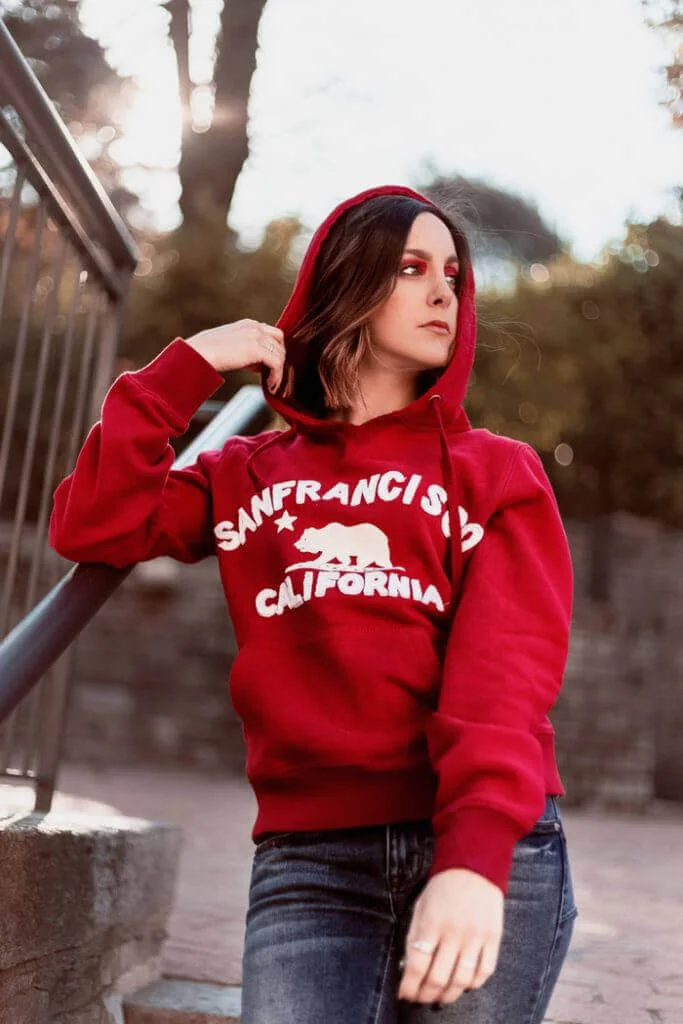
On an embroidered sweatshirt, thread builds the design directly on the fabric. The tactile finish works especially well for logos, names, monograms and compact marks; it is not an automatic replacement for print on every image.
This guide explains when embroidery is appropriate and how to prepare the artwork. For garments, colours and configuration, use the custom sweatshirt catalogue.
When is embroidery suitable for a sweatshirt?
Embroidery suits a compact, recognisable mark: a company logo on the chest, a role name, initials or a team crest. Thread adds structure, but it also creates different limitations from DTF and screen printing.
Ten ideas for embroidered sweatshirts
- company logo on the chest;
- name or role on workwear;
- team or association crest;
- monogram for a premium range;
- club or community symbol;
- small brand mark for merchandise;
- event year or initials;
- team name on the sleeve where the garment allows it;
- simple college-style lettering;
- a coordinated icon across several garments.
Which designs need to be simplified?
Photographs, continuous gradients and tiny details cannot be reproduced in thread like a printed image. Very thin lines and small lettering may lose legibility. Simplifying the artwork, thickening lines or reducing the number of elements can help.
A vector file makes preparation easier, but does not automatically make complex artwork suitable for embroidery. Final size and fabric still have to be assessed.
Choosing the garment and position
The fabric must support the embroidery without distorting the result. Seams, zips, pockets and very thick areas can limit placement. A chest mark normally remains compact; other areas must be checked against the selected garment.
What determines the quotation?
Cost depends on the garment, quantity, position, size and complexity of the artwork. Two logos of the same width can therefore require different work. The quotation should be based on the file and the actual configuration.
Embroidery, DTF or screen printing?
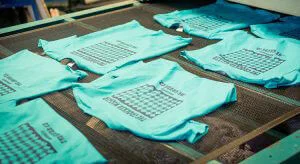
Choose embroidery for a compact mark with a tactile finish, DTF for many colours or details and screen printing for repeated graphics with defined colours. The guide to sweatshirt printing compares the methods.
Then prepare the file and variants with the guide to ordering custom sweatshirts.