





Managing your corporate identity through clothing can influence how customers and employees perceive your SME. Customised corporate workwear can combine practical needs with brand communication. Here is how to choose garments and promotional products while distinguishing workwear from personal protective equipment.
Index
- Definition of custom corporate workwear
- Main types of clothing and gadgets
- Personalisation process: techniques and criteria
- Benefits for branding and corporate culture
- Regulations, safety and legal compliance
- Common mistakes and what to avoid when choosing
Key Points
| Point | Details |
|---|---|
| Custom workwear combines functionality and branding | Workwear can contribute to corporate communication and meet the practical needs of its wearers. |
| Differentiating workwear from PPE | Ordinary workwear does not replace the personal protective equipment (PPE) required by a risk assessment; some garments can be PPE if they meet the applicable requirements. |
| The quality of the materials is essential | Choosing materials suited to the intended use and considering ergonomics helps identify functional, comfortable garments. Protection against risks requires checking the requirements for the necessary PPE. |
| Involve employees in the selection process | Involving employees in the selection helps assess the comfort and functionality of garments. |
Definition of custom corporate workwear
Custom corporate workwear is a collection of garments specifically designed for the workplace, combining practical functionality with the company's visual identity. Workwear can meet practical needs and contribute to corporate communication.
Depending on the garment and its intended use, consider:
- Suitable strength and durability
- Any protection required by the risk assessment
- Ability to visually represent the company brand
- Ergonomic comfort for the wearer
Customisation can help represent the company’s identity. The garment’s functionality and the wearer’s needs remain important considerations.
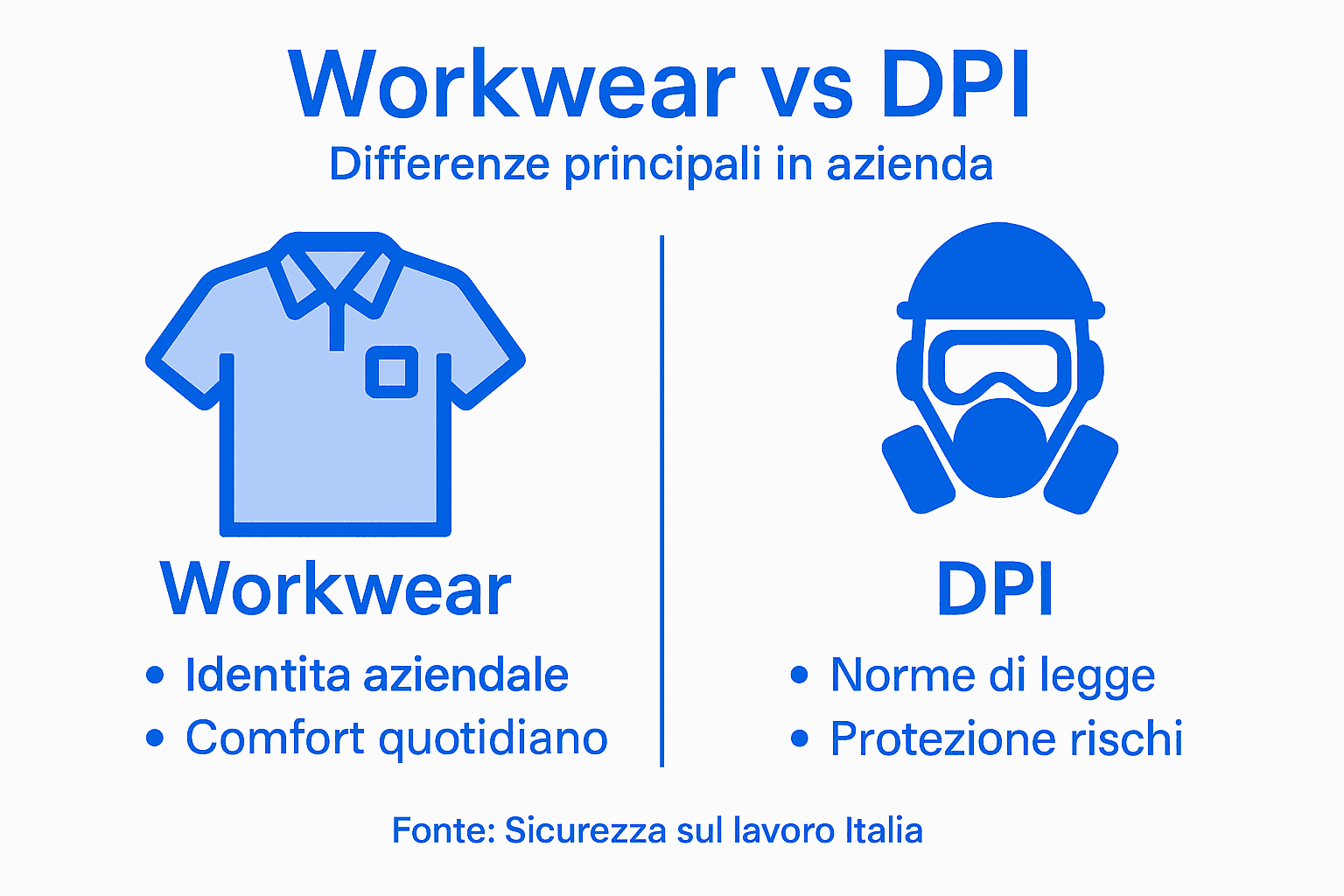
It is important to distinguish ordinary workwear from personal protective equipment (PPE), which is intended to protect against risks. Custom workwear can represent the company’s identity, but does not replace required PPE. A garment can also be PPE if it meets the applicable requirements; customisation must not compromise its protective properties.
Pro tip: Choosing custom workwear means investing not just in workwear, but in a true corporate communication tool that strengthens your brand's image and perception.
Main types of clothing and gadgets
The world of custom workwear encompasses a wide range of garments and accessories that go beyond simple workwear. Professional clothing includes various categories designed to meet the needs of different industries.
The main types of customisable clothing include:
- Work trousers with reinforcements and multiple pockets
- Technical jackets for industrial environments
- Shirts and polo shirts with company logo
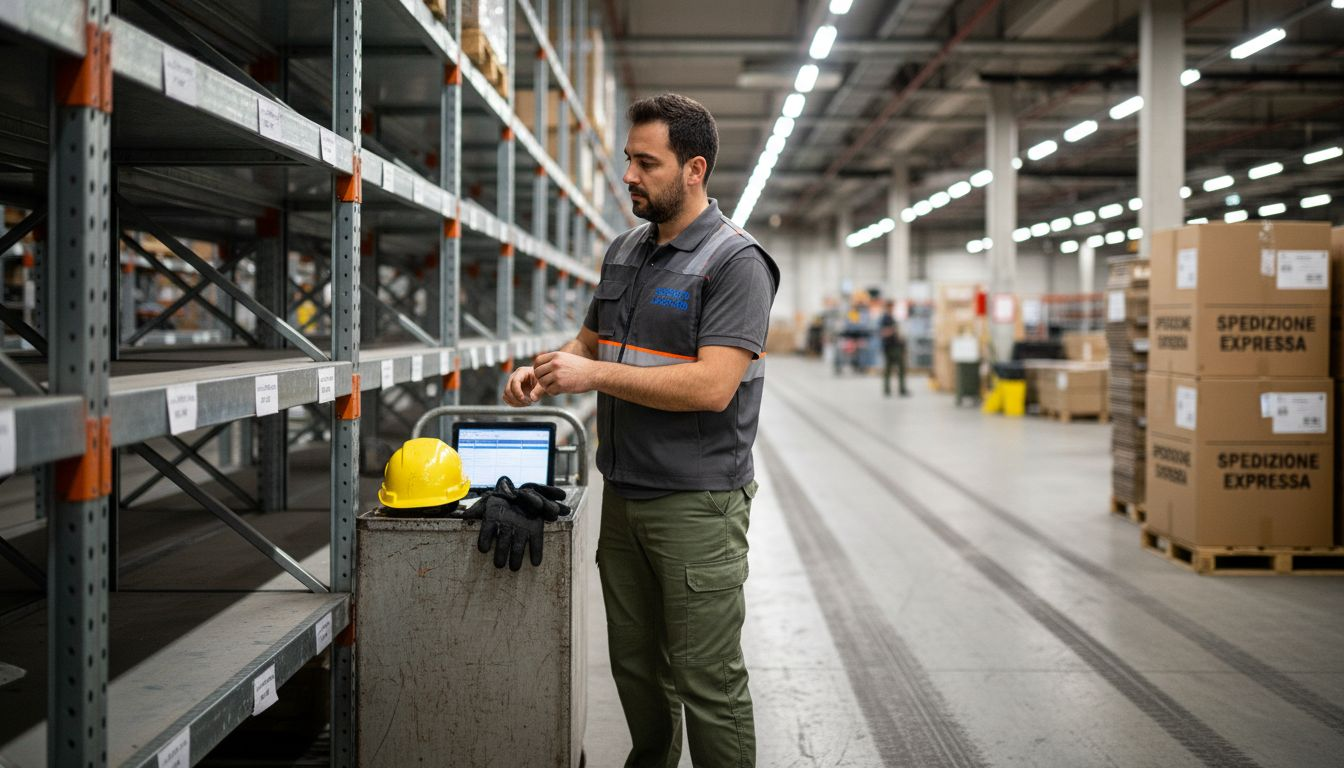
- Gilets and jackets for logistics and construction sectors
- Safety shoes: check any customisation against the manufacturer’s instructions without compromising their protective properties
When it comes to corporate gifts, options stand out for their ability to convey brand identity. Promotional accessories such as keyrings, pens, backpacks and tech devices allow you to extend corporate visibility beyond traditional apparel.
The choice of garments and promotional products should consider aesthetics and the specific needs of the sector. Choose appropriate PPE for identified risks, without confusing it with ordinary workwear.
Pro tip: Always prioritise quality materials and ergonomics when selecting custom workwear, ensuring it best represents your company’s identity and values.
Personalisation process: techniques and criteria
The process of customising corporate workwear represents a strategic path that goes beyond simple garment decoration. Analysing customisation techniques requires a methodical and multidimensional approach that considers various technical and creative aspects.
Key personalisation techniques include:
- Embroidery with the level of detail assessed for the project
- Screen printing for large, uniform prints
- Thermal transfer for complex graphics
- Digital printing for complex designs
- Application of patches and logos with specific techniques
Each technique has specific advantages and limitations. Technology selection criteria depend on factors such as the fabric, design and intended use:
The table outlines aspects to consider for the main techniques; durability, suitability and cost depend on the project.
| Technique | Durability to assess | Examples to assess | Cost |
|---|---|---|---|
| Embroidery | Depends on the project | Thick fabrics | To be assessed |
| Screen printing | Depends on the project | Simple designs | To be assessed |
| Transfer | Depends on the project | Multicoloured graphics | To be assessed |
| Digital printing | Variable | Complex designs | To be assessed |
| Patch | Depends on the project | Logo and crests | Variable |
- Fabric type
- Durability required
- Design complexity
- Available budget
- Context of use of the garment
The choice of technique should consider aesthetics and functionality, checking that the customisation suits the garment and does not compromise its technical characteristics.
Pro tip: Always consult with a textile customisation expert to determine the best technical solution for your specific workwear project.
Benefits for branding and corporate culture
Branding through custom workwear can contribute to company recognition and internal and external communication, without in itself guaranteeing employee engagement.
Possible contributions to corporate culture include:
- Strengthening organisational identity
- Supporting employees’ sense of belonging
- Supporting team cohesion
- Facilitating nonverbal communication of company values
- Promotion of a professional and unified image
Workwear customisation becomes a key element in building a consistent corporate image, contributing to the organisation’s internal and external communication.
These garments can communicate a recognisable and professional corporate image.
Pro tip: Involve employees in choosing corporate workwear to take their needs into account.
Regulations, safety and legal compliance
Legal compliance in workwear requires assessing risks and distinguishing ordinary garments from the PPE needed to protect workers.
In the Italian regulatory context discussed here, key elements of compliance include:
- Compliance with Italian Legislative Decree 81/08
- Use, when required, of appropriate Personal Protective Equipment (PPE)
- Industry-specific risk analysis
- Continuous safety training
- Assessment of applicable protection standards
Italian workplace safety regulations require a risk assessment and the selection of appropriate protective measures. When PPE is needed, check its applicable requirements and suitability for the intended use.
Legal compliance in workwear is not merely a bureaucratic requirement, but a concrete investment in the well-being and safety of workers, requiring careful and professional evaluation of every single aspect of professional clothing.
Pro tip: Periodically check the condition of garments and, for PPE, verify the applicable requirements and manufacturer’s instructions.
Common mistakes and what to avoid when choosing
Selecting custom workwear requires consideration of its intended use, fit and workers’ needs. When PPE is required, the choice must take account of identified risks and applicable protection requirements.
Main mistakes to avoid:
- Confusing workwear with PPE
- Selecting low-quality fabrics
- Neglecting the ergonomics of garments
- Ignoring, for required PPE, the applicable compliance requirements
- Underestimating garment maintenance
The risks of making the wrong choice depend on the intended use: unsuitable garments may be uncomfortable or impractical, while unsuitable PPE may not provide the required protection. Choices should therefore start with the activities performed and the risk assessment.
Here's a summary of the most common mistakes when choosing workwear and their consequences:
| Typical error | Impact on safety | Effect on corporate image |
|---|---|---|
| Low quality fabric | Possible unsuitability for the intended use | Unprofessional image |
| Failure to check PPE requirements | Possible non-compliance | Possible impact on trust |
| Size error | Discomfort for workers | Inconsistent team appearance |
| Neglecting maintenance | Possible deterioration of the garment | Sloppy look |
A common mistake is not directly involving employees in the selection process, neglecting their ergonomic and comfort needs. Each sector has specific characteristics that require a thorough evaluation of the garments' technical characteristics.
Pro tip: Conduct fitting sessions with employees before purchasing workwear, gathering direct feedback on the fit and comfort of the garments.
Enhance your custom workwear with professional printing solutions
When choosing custom workwear, consider the needs of your sector, fit and intended use. If PPE is required, check that the garment is suitable and that customisation does not compromise its protective function.
At Burger Print you can explore customisable workwear and corporate gifts. Check the customisation options available for each item.
Compare garments according to your team’s needs, fit and available customisation options.
Frequently Asked Questions
What is custom workwear?
Custom workwear comprises workplace garments that combine practical needs and corporate identity. It does not replace PPE required for identified risks.
What are the main advantages of custom workwear for companies?
Custom workwear can contribute to a consistent, recognisable corporate image and support employees’ sense of belonging.
What customisation techniques can be used for workwear?
Personalisation techniques include embroidery, screen printing, heat transfer, digital printing, and patch and logo application.
How to ensure the safety and legal compliance of workwear?
Assess the risks and choose appropriate PPE when necessary, checking applicable requirements and ensuring that customisation does not compromise its protective function.